Will 2024 be a better year for seafood M&A deals? See what the experts have to say

This year is set to be a better year partly amid improved stock market sentiment, financial executives told IntraFish.

The seafood industry could see more mergers and acquisitions in 2024, although deals may be smaller and driven by the technology and artificial intelligence sectors, according to those in the M&A business.

There were fewer M&A deals last year, despite the fact the seafood sector did not suffer as significant a fall as several other sectors.

Ignacio Kleiman, managing partner at investment banking firm Antarctica Advisors, said he expects 2024 to be a better year amid improved sentiment towards the stock market and an expectation of easing interest rates.

“I think that the outlook is positive. Last year was a little slower because we were digesting higher interest rates and some volatility in Ukraine and all of that. But I think all of that has been digested already. Besides that, there was volatility in different sectors of seafood, in shrimp, in salmon, in snow crab still, and lobster. It was a pretty difficult year in general.”

In spite of this, a number of transactions did happen. An IntraFish analysis shows 77 acquisitions and investments were completed during 2023, down more than 7 percent from 2022’s 83, but 18.5 percent higher than the reported 65 deals during 2021.

Antarctica itself closed the sale of Seafresh to Oceana of Peru and the Continental Grain Company (Conti), Organizacion Cultiba SAB de CV (Cultiba), Equity Group Investments (EGI), and Castle Harlan investment in Mexico-based tuna rancher Baja Aqua Farms, in addition to a number of unreported private deals.

“There is more stuff popping up. I think people have an expectation that eventually interest rates are going to startcoming down, inflation is coming down, earnings and profitability is stabilizing,” Kleiman said.

“The understanding and the expectation is that we are on the other side of this curve, and earnings and the cost ofmoney is and will continue to stabilize. I think that is favorable winds for a pick up in M&A activity, ” Kleiman said.

Given the trend for seafood industry consolidation and the drive for companies to become more efficient, deals of all sizes in different sectors and countries are likely in his view.

“Last year, people were pretty focused on improving their operations, so they were inwardly focused. This year, we are going back to a more normal environment where people are also looking for acquisition opportunities to grow.”

John Doucette, executive vice president and head of commercial lending for US-based M&T Bank, said he expects M&A levels to be similar to those of 2023.

“There is certainly M&A activity that is out there. I think that trend is still going to continue. Values might come down a bit given the interest rates.”

In a difficult climate, banks want to see steady cash flow and, where possible, upswings in this metric before lending, the executive said.

“You are going to see more private equity or family office [involvement]. There are going to be some mergers where there is not going to be as much cash.”

Doucette expects to see lower deal valuations, especially in the US Northeast where the industry is more fragmented.

Interest rate reductions expected to begin in mid-2024 could also help propel the number of M&As in Doucette’sview. “That’s certainly going to make it easier to digest,” he said.

Tech and equipment are sexy

Seafood Corporate Advisors Partner Jorgen Horntvedt said seafood M&A in 2024 will be all about technology and equipment, with tech providers really relevant in terms of decreasing environmental footprints and collecting utilizing data to enable more informed real-time decisions and improving efficiency.

“Utilizing byproducts will provide further consolidation opportunities for larger ingredient companies. Overall, the ongoing consolidation across the equipment supplier segment is expected to continue,” Horntvedt said.

For Hakon Berg, CEO at Norway-based investment group Skeie Teknologi, there is likely to be a fair amount of M&A activity across the digital seafood space in 2024 because of a growing need for data and precise measuring.

There is a significant number of these companies in the space and many of them are looking for cash, and as they become more mature businesses they are becoming more attractive targets, he added.

The prognosis is less clear for Norwegian salmon farmers, who were hit last year with a new 25 percent tax, known as the ground rent tax, on their sea-based farming operations.

“In Norway, the aquaculture tax could lower M&A volumes due to market uncertainty, but the market could also see a heightened focus on consolidation amongst farmers,” Berg said.

“I think we could see a growth in trade sales of smaller farmers due to the tax situation in Norway and the overall economies of scale in the industry.”

SOURCE: The Wave

Seafood M&As are changing – Here’s how

It’s not only the rate of M&A’s that has slowed in seafood but the shape and structure of deals too.

M&A deals in the seafood industry are being reshaped by current economic factors that are impacting both the rate of dealmaking and how deals are structured.

The rate of M&As in the seafood industry is expected to be hindered by the difficulties in raising financing, said John Doucette, executive vice president and head of commercial lending for US-based M&T Bank.

“I think it’s going to be at a lesser pace just given the cost of money now,” Doucette told IntraFish.

A recent IntraFish report forecasted the number of global seafood M&A’s this year is likely to fall short of 2022 levels.

While international companies have been showing interest in moving in on US acquisitions, particularly in the then-northeast corner of the United States where the seafood industry is more fragmented, Doucette said commercial interest rates play much more into executives’ thinking.

“It’s just tough with the prime rate at 8.5 percent, and although (the US Federal Reserve) didn’t raise it the other day they certainly didn’t give any indication that they are going to reduce rates anytime soon either. It’s going to rely on more self-financing too,”

Must have?

The higher cost of capital is also making buyers more cautious, leading to the postponement of deals considered less strategic, Ignacio Kleiman, managing partner at investment banking firm Antarctica Advisors said.

Acquisitions generally fall into two categories “must have” and “nice to have,” Kleiman said.

“If you are presented with a have-to-have transaction, you are going to find a way to do it. If you are presented with anice-to-have transaction, you may do it or you may decide to postpone it a bit.”

While there is still a good volume of M&A activity, in part helped by pent-up demand left over from the COVID-19 pandemic, deals that are going ahead are seeing a greater use of earnouts and seller financing arrangements.

Earnouts are a pricing structure in which the sellers must “earn” part of the purchase price based on the performance of the business following the acquisition.

Seller financing is an arrangement in which the seller handles the mortgage process instead of a financial institution. Instead of applying for a conventional bank mortgage, the buyer signs a mortgage with the seller.

“Transactions are getting done. I think that buyers are being a little bit more disciplined on how they put the transactions together and what transactions are getting done because the cost of capital is forcing them to pursue transactions that have a fairly higher level of synergies in order to recoup some of that more expensive capital that they are using,” said Kleiman, who spoke on the changing nature of the seafood industry at a recent seafood industry forum in New Bedford, Massachusetts.

The event, which drew 60 seafood business leaders, was organized by M&T Bank, which operates over 1,000 branches in 12 US states, and accounting firm Citrin Cooperman, with the support of investment banking group Antarctica Advisors.

The forum was targeted at key seafood players in the New Bedford and the wider New England community to exchange ideas on current events affecting the sector. It’s hoped the forum might become an annual or biannual event.

Be creative

Where previously companies may have worked with a commercial bank and ended up signing a single check to make an acquisition, these days buyers and sellers need to be a bit more creative in how a deal is structured.

Companies may opt not to sell all of their shares in the business, retaining a minority and rolling over some of their equity, exiting perhaps three to five years later.

“It requires a little bit more creativity with buyers, a little more flexibility on both the seller and the buyer side.”

“Today, more than ever, you need an investment banker to help those transactions happening,” Kleiman said.

The northeast corner of the United States with its proliferation of $100 million to $400 million (€93 million €372million) seafood companies is proving attractive to those on the lookout for acquisitions including overseas investors, offering them more manageable deal sizes and boosting the likelihood of consolidation, Kleiman said.

“In terms of international players, I think the Europeans are a little more aggressive than the Asians, that’s why you see more movement on the east coast,” Kleiman said.

On the West Coast there are few processors, and in the Alaska-Seattle corner of northwest United States companies are frequently very large or very small, with little in between, he noted.

Even in the most challenging times, deals can be done, however, said Kleiman.

Despite the difficulties presented by COVID lockdowns, Antarctic Advisors still managed to close its biggest-ever deal in January 2021 when Premium Brands Holdings and a coalition of Mi’kmaq First Nations completed the acquisition of Canadian shellfish harvesting and processing giant Clearwater Seafood.

For Premium Brands the acquisition was a must-have deal. “Everyone decided to chug along,” Kleiman said.

___

Source: Intrafish

Antarctica Advisors Acts as Exclusive Investment Banking Advisor to Sea Fresh USA in its 100% Sale to Oceano Seafood

September 26, 2023 – Antarctica Advisors LLC, the leading Seafood Industry-focused M&A advisory firm, acted as the exclusive investment banking advisor to Sea Fresh USA (“Sea Fresh”), one of the largest processors of fresh, premium-quality, wild-caught Loligo Squid in the U.S., in its sale to Oceano Seafood (“Oceano”), an international fishing and processing conglomerate from Lima, Peru.

Founded in 1981, Sea Fresh USA is a fully integrated seafood business with fishing, unloading, processing & packing operations. Sea Fresh has docking operations in Galilee, RI (Handrigan Seafoods) and a BRC-certified processing facility in North Kingstown, RI. The company is well known for its fresh and frozen Squid products distributed through retail and food service.

James Fox, Owner of Sea Fresh, commented: “Oceano has been a customer of ours for several years and we are excited to be their first acquisition in the U.S. market. We are thankful to have worked with the Antarctica Advisors team who played a key role in helping us navigate this complex transaction process. Their senior banker M&A advice was critical to the structuring and negotiating the best possible transaction for me and my employees.”

Ignacio Tirado, President of Oceano Seafoods, shared: “It is an honor to continue Jim Fox’s legacy and to join the company’s experienced management. We aim to continue investing and growing the business in the U.S. and integrate it our global sourcing capabilities into it.”

Ignacio Kleiman, Managing Partner of Antarctica Advisors, pointed out: “Sea Fresh provides Oceano direct access to the U.S. market with a brand recognized for its high-quality fresh Squid products. We very much appreciated the opportunity to have worked with Sea Fresh’s team and look forward to watching the company’s continued growth.”

For Oceano, the acquisition of Sea Fresh expands its international footprint while deepening its supplier network and presents numerous synergies facilitating growth including diversifying its product offerings with access to the U.S. market.

Antarctica Advisors is the leading US-based, independent investment banking firm providing corporate clients in the global Seafood Industry with specialized M&A advisory, private equity and debt capital raising services. The firm’s highly specialized Seafood Team is comprised of professionals with significant knowledge of the Seafood Industry, as well as a proven track record of successful transaction execution.

Antarctica Advisors LLC is a licensed broker-dealer, member of FINRA and SIPC.

For further information contact Ignacio Kleiman, Antarctica Advisors LLC at:
IKleiman@AntarcticaLLC.com or visit www.AntarcticaLLC.com

Antarctica Advisors Acts as Exclusive Investment Banking Advisor to Boston Sword & Tuna in its 100% Sale to Fortune International, LLC

June 13, 2023Antarctica Advisors LLC, the leading Seafood Industry-focused M&A advisory firm, acted as the exclusive investment banking advisor to Boston Sword & Tuna, Inc. (“Boston Sword”), one of the largest distributors of fresh, premium-quality, wild-caught and farm raised seafood in North America, in its sale to Fortune International, LLC (“Fortune”), one of the largest seafood and specialty food distributors in the United States.

Based in the heart of Boston’s Seaport District, Boston Sword was established in 2003 by the Scola Family.  Michael Scola, CEO of Boston Sword, will continue to run the company along with Co-Owner and President Larry Dore.  With the backing of Fortune and capacity added through a recent 9,000 sq. ft. expansion of its processing plant, Boston Sword will take its already sizable skin-pack business national and significantly grow its other lines of business.

Read more

Access to finance tightening, but savvy seafood businesses can still make deals

The U.S. Federal Reserve raising interest rates has caused banks to pull back on financing, and that means merger and acquisition activity will slow in the coming quarters, according to a panel of financial experts, speaking during Seafood Expo North America.

The panel, on 14 March at SENA in Boston, Massachusetts, agreed higher interest rates and an uncertain economic situation will lead banks to be much more selective about lending than they were during the post-Covid recovery period when financing was cheap. However, Jason Brantly, a senior vice president and senior relationship manager at Bank of America, said banks will still want to help make deals if the numbers make sense.

“The pendulum has definitely swung from really aggressive lending and obviously cheaper lending rates, but banks are still eager to lend,” Brantly said.

The failure of Silicon Valley Bank on 10 March, and the subsequent failure of Signature Bank, were two of the three largest bank failures in U.S. history, but a lot of the money that was taken out of those banks didn’t just disappear, and Brantly said both Bank of America and fellow panel member John Doucette’sinstitution – M&T Bank – are likely going to see large deposits in the near future as people look for more-stable institutions. That means banks will have more money to reinvest in customers.

However, signs are pointing to banks paring back the amount of lending they do. The leverage B loan market pulled back in January and February as banks decided against loans with slightly higher risk, Brantly said.

“2022 was one of the lowest years in more than a decade, and we’re well below that pace,” he said. “I think what’s happened in the bank market in the last week will probably continue to make it where there is not going to be a lot of folks wanting to go to that market and access capital.”

A court decision finding fishing permits are a revocable privilege, rather than a compensable property, will also impact valuations for seafood companies with wild-catch operations. Depending on how the ruling gets interpreted, that may make it more difficult for companies with fishing vessels to access financing.

“If that becomes a precedent, that will have a substantial impact for those kinds of companies and their ability to access capital markets,” Brantly said. “We depend on that quota as collateral.”

More-expensive financing, coupled with an increasing reluctance from banks to lend to businesses, doesn’t mean merger-and-acquisition activity is off the table – as evidenced by the announcement that Cooke was acquiring Slade Gorton just hours after the panel took place.

“I think the appetite is still there. We’re certainly still interested in lending,” Brantly said.

Doucette said for many transactions requiring large amounts of financing, senior lending institutions aren’t the way to go.

“It’s very easy when rates are low to sit back and say, ‘Get everything you can out of that senior lender,’” he said. “But that term B stuff has just gone away, so now it’s time for the private-equity folks, the family offices. We’ve seen a lot of international activity in the [U.S.] Northeast coming in.”

Term A loans are amortized evenly over five to seven years, while term B loans have nominal amortization over the first five to eight years of the loan and then a large payment in the final year, making it less costly for the company getting the loan, but riskier for the bank in the long run.

Brantly said term B acquisitions are more difficult, but a creative business deal can still be struck – it just takes work and sound advice from advisors. The community development groups in Alaska that partnered with Maruha Nichiro to purchase nine pollock vessels, he said, are one example of groups coming together to make creative deals with unique structures that still accomplish merger and acquisition goals.

Softness creeping into the global economy will also more than likely force some businesses that fall into difficulty to pursue a sale.

“That’s what it’s going to take, is more folks either going together splitting up the deal, or coming together to hold assets in that kind of creative way,” Brantlysaid.

Antarctica Advisors Managing Partner Ignacio Kleiman said that those companies in tight spots should not wait to get in touch with an advisor if the predicted recession makes things difficult for them.

“Don’t wait to call somebody,” he said. “We have worked with many companies in the sector that went through financial difficulties. The smartest ones, they realize it right away, and they would call us or some other advisor.”

Getting ahead of liquidity problems early, and getting in touch with commercial banks early, can help stave off a bigger problem down the road.

“The main thing they are looking for is, do you have a plan?” Kleiman said. “They don’t want to take over your company. They don’t want to liquidate you. They like their clients, and we have done a number of transactions where we work collaboratively. But they want to see that you’re taking your situation seriously.”


Photo by Chris Chase/SeafoodSource

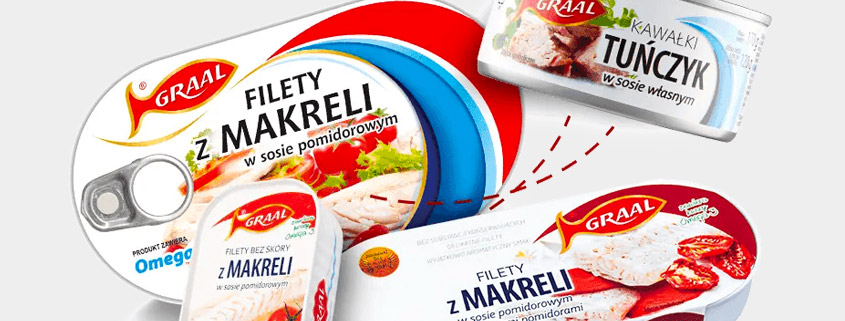
Antarctica Advisors Acts as Investment Banking Co-Advisor to the Shareholders of Poland’s Graal in the Sale of its Canning Business to Germany’s Müller Group

MIAMIFeb. 21, 2023 /PRNewswire/ — Antarctica Advisors International Corp, the leading Seafood Industry-focused M&A advisory firm, and Rothschild & Co, acted as the joint investment banking advisors to Abris Capital Partners and Mr. Boguslaw Kowalski, the CEO and founder of Graal Capital Group (“Graal”), a leading fish processor in Poland, in the sale of its Canning Business to Lisner Holding, a subsidiary of Germany’s UTM (Unternehmensgruppe Theo Müller) food group. The transaction is subject to Poland’s antimonopoly office approval and excludes Graal’s fresh and smoked fish business (Koral S.A.), produced under the Superfish brand and private label.

Headquartered in Wejherowo, Poland, Graal manufactures canned and chilled fish-based products and prepared foods, branded under the Graal, Neptun and Kuchnia Staropolska brands, and is a major private label supplier. Graal today operates four manufacturing facilities in Poland, employing more than 2,200 people, and exports to 38 countries across EuropeNorth AmericaAsiaAfrica and Australia. The company recorded sales of EUR 350m in 2022.

Read more

Revista Redes – Apuntes de Barcelona

Arrancó el año gestionando la venta de los activos de pescado blanco que tenía el grupo Cooke en Icicle Seafood y que compró Maruha Nichiro asociada con dos comunidades de Alaska, y cumplió un rol similar con la griega Kefalonia en su venta a la española Profand. También sesoró a Clearwater en su venta, otra de las operaciones que aparecen en el portal de la compañía, y que prueban la experiencia de Antarctica Advisors en M&A, sigla inglesa para mergers and acquisitions (fusiones y adquisiciones). REDES encontró en Barcelona a su director ejecutivo, Ignacio Kleiman, acompañado por German Thoss, también socio y asesor de la consul­tora, que tiene su base de operaciones en Estados Unidos. Inmejorable oportunidad, entonces, para conocer la vocación del mercado de seafood en materia de compras y adquisiciones, y para corrobo­rar si, como se dice, su atomización supone un pro­misorio panorama para las M&A. Read more

Antarctica ups focus on European M&A after selling Kefalonia to Profand

US-based M&A advisory firm Antarctica Advisors is increasing its focus on European deals, having just closed the sale of Greek seabass and seabream farmer Kefalonia Fisheries to Grupo Profand.

Antarctica added Magnus Thorsson, a former Deloitte executive based in Iceland, to its team last September, managing partner Ignacio Kleimantold Undercurrent News.

Thorsson is based in Iceland, where Birgir Brynjolfsson, a founding partner of Antarctica, is also spending more time working on European deals, in addition to his North America-focused work, Kleiman said.

Brynjolfsson said he’s still “spending considerable time at the company’s office in Miami and on the road working on executing North American transactions”.

Antarctica is responding to demand from its customers by having one eye on Europe.

“As we’ve continued to increase our M&A activity, we’ve been approached by several European seafood companies expressing interest in our services and we are responding to that demand by becoming more relevant in Europe,” Brynjolfsson told Undercurrent. 

“Having a presence in Europe is a logical step towards executing more transactions with our clients and industry contacts. We already have a number of engagements ongoing and expect to increase activity in 2022.”

Antarctica’s European work, to date, has been more focused on assisting European companies to do deals in North America, Kleiman told Undercurrent.

However, there is also a big opening for deals flowing the other way, saidBrynjolfsson.

The firm is seeing “the most opportunity for cross-border transactions [inEurope], which represents the majority of our activities in recent years”, he said.

“Further, the fundamentals in Europe are similar as in North America where there’s a push for efficiency improvements through consolidation and many companies are still family-owned and facing succession challenges.”

Antarctica is “expecting the European market to experience continued consolidation in processing and distribution, continued interest from financial investors, and more of European resource companies looking overseas for additional access to resources or stronger access to markets”,said Brynjolfsson.

As for the Profand acquisition of Kefalonia, the rationale is for the Spanish processor and fishing company to take the Greek farmer’s products into new markets, Brynjolfsson said.

“Kefalonia is a top-class aquaculture company producing high-quality products and that was attractive to Profand, which has strong access to markets worldwide. Further, this was a cultural fit as both companies are family-owned with strong business values focused on sustainability,” he said.

Source: Undercurrent News.

With over 60 major deals last year, even COVID can’t stop seafood’s M&A streak

M&A activity in the sector went on a tear in 2021, and is already off with a bang this year.

Despite another year of the COVID-19 pandemic, investor interest in the seafood sector was still strong in 2021. A tally of IntraFish coverage shows at least 65 notable mergers, acquisitions or significant investments occurred last year.

That’s compared with the roughly 75 deals that occurred in 2019, pre-pandemic, and the nearly 60 that took place in 2020.

Inevitably, the activity was slightly slower than in pre-pandemic times, as travel bans remained in place for much of the year.

As Ignacio Kleiman, a principal at seafood M&A advisory Antarctica Advisors, put it in an interview with IntraFish earlier last year: “It is very difficult to make a large investment decision if you are not able to thoroughly kick the tires in person.”

But 2021 saw a lot of pent-up demand carry over from 2020, and while COVID — particularly the new omicron variant — hangs over the world, activity and travel will inevitably pick up again, with some expecting a return to “normal” in the first half of this year.

Some sectors hotter than others

Of all the segments, farmed salmon showed perhaps the most interesting M&A trajectory, with the long-running “will they, won’t they?” purchase of Australia’s Huon Aquaculture by Brazilian meat giant JBS; Grieg’s move out of the UK with its sale to Scottish Sea Farms; and NTS’s purchase of Norway Royal Salmon, a deal that creates the world’s sixth-largest salmon producer.

In whitefish, too, the scent of money was strong. During the year, Russian catching giant Norebo was involved in a string of acquisitions, reflecting rocketing investments in both the public and private sectors into the country’s seafood industry.

In Central America, shrimp farmer Martec bought Costa Rican producer Rainforest Tilapia from AquaChile.

And in the fisheries and processing segment there were deals galore. Alaska’s wild salmon industry, for example, saw consolidation of the sector continue.

Just weeks before the start of Bristol Bay fishing season, Canada-based Canfisco swept in and bought up fellow major processor Marubeni-owned North Pacific Seafoods. It followed Canfisco’s earlier purchase of the assets of Bristol Bay salmon processor Deep Sea Fisheries and a string of major mergers the year prior.

Canada also led big buck action in 2021 when Premium Brands, along with the Mi’kmaq First Nation, completed a $769 million takeover of Canadian seafood giant Clearwater Seafood, and Sofina Foods reached a deal to acquire Young’s Seafood parent Eight Fifty, bringing the UK’s largest seafood company under Canadian ownership.

“A lot of deals were put on hold, or they slowed down, or they died, because of the inability to travel,” said Kleiman.

“I think that affected volume for 2021, and that’s why I think in 2022 the picture is going to be substantially different … I think 2022 will be a very active year.”

A week into the New Year and IntraFish has already reported on a string of M&A deals.

In the United States, seafood supplier Fortune International and foodservice giants Chef’s Warehouse and HF Foods Group made acquisitions in the sector.

Faroese salmon farmer Bakkafrost acquired Denmark-based Munkebo Seafood, and two interesting acquisitions from Thai Union Group and Russian giant Norebo indicate a change in how companies think about the supply chain.

Private equity’s massive war chest puts seafood industry in the crosshairs

With plenty of ‘dry powder’ to detonate, private equity funds are competing with each other and the seafood industry itself for deals.

A growing number of the world’s investors are waking up to something only a small group of private equity funds, trade buyers, venture capitalists and M&A advisors have known for years: there’s big money to be made in seafood.

The race is on, and the accelerating rate at which private equity firms in particular are investing in the seafood sector shows that fund managers recognize the industry — processing, fisheries, aquaculture and equipment — has all the right drivers.

Simply put, there is a lot of demand for capital in the seafood industry, and private equity funds have more cash to deploy than ever.

Private equity firms are benefiting from market tailwinds triggered by historically low interest rates and record fundraising.

In the US alone, private equity “dry powder” — the amount of money funds have to invest — is at an estimated $150.1 billion (€132 billion), according to PWC’s Private Equity 2021 Mid- Year Outlook.

And that dry powder is being put to use. Private equity-backed M&A deals more than doubled to a record $818.4 billion (€722 billion) in the first nine months of 2021, up from $315.2 billion (€278 billion) last year, according to Reuters.

Birgir Brynjolfsson, a partner at Antarctica Advisors, a boutique M&A specialist focused on the seafood sector, said the trend in private equity is coinciding with a growing need for investment in everything from new technology to new vessels, facility upgrades and consolidation.

With underlying assets that appreciate in value — plants, vessels, fishing quotas and licenses — and a growing demand for its products, the seafood industry has become “very attractive” to the sector, Brynjolfsson said.

Getting more aggressive

Ten years ago, Antarctica Advisors was knocking on the doors of private equity funds trying to introduce them to seafood as an investment opportunity. It took a lot of time, effort and salesmanship, and for the most part few funds took the plunge.

“Today we are in a position where we are getting the phone calls from the different private equity funds asking us for opportunities,” said Brynjolfsson.

While big names have invested in the sector in the past — Altor, Bain, Permira and Carlyle to name a few — the trend has accelerated over the last few years.

In October, the $6 billion US private equity fund ACON snapped up US scallop supplier Northern Wind plus two small Canadian lobster companies in a deal advised by Antarctica.

Last month, private equity group Paine Schwartz, the former owner of Alaska processor Icicle Seafoods, acquired a 50 percent stake in Hendrix Genetics, the owner of shrimp and salmon egg, smolt and broodstock suppliers, including Kona Bay, Troutlodge and Landcatch.

There is no single reason that could be considered a turning point for the uptick in interest, but rather there are a combination of factors, Brynjolfsson said.

With more capital being allocated to private equity, these funds have to look further afield for interesting opportunities, and seafood is, to many of them, new territory.

In addition, some segments of seafood are now emerging as a potential fit for funds investing in sustainability focused companies.

And most importantly, seafood consumption — the No. 1 driver of the sector — is growing and shows no sign of declining.

The typical lifespan

Typical private equity funds have a limited life cycle, and look to deliver a return to investors and sell off their stake in a company within 5-7 years.

Whether the limited life cycle of a private equity fund is long enough for it to make a significant difference depends on where it invests in the sector and value chain, however, and some investors have paid significantly for not understanding the subtle nuances of the sector.

“In some case 5-7 years is an acceptable period, but in other cases you may not achieve what you wanted to achieve in that period because of external factors out of your control,” said Brynjolfsson.

Magnus Bjarnason, managing partner at Iceland-based advisory firm Mar Advisors, noted that the sometimes unpredictable nature of some segments of the seafood industry, especially fisheries and aquaculture, can make private equity’s timeline too short.

“Seafood is a tremendously profitable sector, but it is also cyclical … and these cycles make it difficult for private equity to get used to,” Bjarnason told IntraFish.

While Bjarnason does see private equity activity picking up, he sees equally strong growth in institutional capital and pension and family funds, whose longer horizons are sometimes a better fit.

Part of private equity’s challenge is that shaking loose owners from their stakes can be difficult in the seafood industry, where private ownership is higher than in most other sectors, and founding families and their descendants can be strongly committed to their businesses, Bjarnason noted.

That is giving rise to a hybrid model where investors essentially partner with private owners, with both bringing assets the other party doesn’t have: money, and expertise.

A battle for buys

While private equity funds increase their activity in seafood, existing large seafood companies with the means to acquire and consolidate have been more passive of late.

Ignacio Kleiman, managing partner at Antarctica, said the pandemic forced many potential trade buyers to look inwards and handle the challenges of day-to-day operations, which for some companies was the right move.

“There was a lot of organic growth, and good margin expansion because demand was strong, so I think that made them happy,” Kleiman told IntraFish.

The year prior, when the reality of the pandemic first set in, the economic uncertainty and inability to travel had a chilling effect on industry consolidation.

“A lot of deals were put on hold, or they slowed down, or they died because of the inability to travel,” said Kleiman.

“It is very difficult to make a large investment decision if you are not able to thoroughly kick the tires in person. That affected volume in 2021 [and] I think in 2022 the picture is going to be substantially different.”

Private equity tends to follow the deals, and move into sectors where competing funds are active.

Additionally, when funds buy into a company, the strategy is often to grow that company both organically and through add-on acquisitions, so it stands to reason more deals will be forthcoming.

“This is definitely the beginning of something more that is coming, no doubt about that,” said Antarctica’s Brynjolfsson. “We’ve never been busier.”